NISSAN 320B0-3NA0A Leaf Automatic Transmission A/t 74K F020
fits make: Nissan. year: 2011–2012.
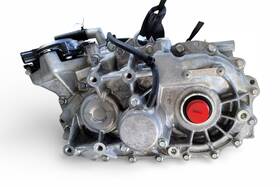
( Manufacturer Part Number: 320B0-3NA0A ), ( Model: LEAF ), ( Part Type: Transmission ), ( Part Category: Transmission-auto ), ( Fitment Type: Direct Replacement ), ( Genuine Oem: Yes ), ( Part Source: Genuine Oem ), ( Fitment Notes: Check Listing Description For Exact Fitment. ), ( Oe/oem Part Number: 310c0-1xc6b ), ( Manufacturer Warranty: 90 Day )
Review NISSAN Leaf Automatic Transmission A/t 74k Miles fits 2011–2012
The **Nissan 320B0-3NA0A** automatic transmission, specifically designed for the **2011 2012 Nissan Leaf** with the **F020** platform, represents a sophisticated and compact yet robust powertrain solution tailored for Nissan s pioneering all-electric vehicle. This transmission is a critical component of the Leaf s **CVT (Continuously Variable Transmission)** system, which eliminates the need for traditional gears while delivering seamless acceleration and efficient energy transfer from the electric motor to the wheels. Unlike conventional automatic transmissions, the **320B0-3NA0A** operates without discrete gear ratios, instead utilizing a pair of pulleys connected by a variable-width belt to achieve an infinite range of effective gear ratios. This design enhances fuel efficiency (or, in the case of the Leaf, energy efficiency) by minimizing energy loss through friction and allowing the motor to operate at optimal RPM for maximum torque and range. The transmission is engineered to handle the unique demands of an electric powertrain, where instant torque delivery and smooth acceleration are paramount, particularly in urban driving conditions where the Leaf excels. Built with precision, the **320B0-3NA0A** incorporates a **hydraulic pressure control system** to regulate clutch engagement and belt tension, ensuring reliable performance even under varying loads and temperatures. Its compact form factor is a testament to Nissan s engineering ingenuity, allowing the transmission to fit seamlessly into the Leaf s limited under-hood space while maintaining durability and longevity. Over the course of its production for the 2011 2012 models, this transmission has been refined to address early concerns related to wear and tear, particularly in the belt and pulley system, though some owners may encounter issues like belt slippage or fluid leaks over time, necessitating regular maintenance and fluid changes. When properly serviced, the **320B0-3NA0A** provides a quiet, responsive, and efficient driving experience, making it a standout feature of the Leaf s early iterations. For enthusiasts and mechanics alike, understanding the intricacies of this transmission is essential for maintaining the Leaf s performance, reliability, and longevity in the ever-evolving world of electric vehicles.
### **Pros and Cons of Buying a 2011-2012 Nissan Leaf (320B0-3NA0A, Automatic Transmission, F020)**
#### **Pros**
1. **Environmentally Friendly** The Nissan Leaf is a fully electric vehicle (EV), producing zero tailpipe emissions, which is ideal for urban driving and eco-conscious buyers.
2. **Low Operating Costs** Electricity is significantly cheaper than gasoline, reducing fuel expenses. Additionally, EVs have fewer moving parts, leading to lower maintenance costs compared to internal combustion engine (ICE) vehicles.
3. **Instant Torque & Smooth Acceleration** The electric motor provides immediate power, resulting in quick acceleration and a responsive driving experience, especially in city traffic.
4. **Regenerative Braking** The Leaf s regenerative braking system helps extend battery life by recapturing energy during deceleration, improving efficiency.
5. **Government Incentives** Depending on location, buyers may qualify for federal, state, or local tax credits, rebates, or HOV lane access, reducing the overall cost of ownership.
6. **Low Maintenance Requirements** EVs have no oil changes, fewer fluids to replace, and no exhaust systems, reducing long-term maintenance expenses.
7. **Quiet & Comfortable Ride** The absence of an engine means less vibration and noise, contributing to a more comfortable cabin environment.
8. **Good for Short to Medium Commutes** The Leaf s range (around 84 100 miles on a full charge in these models) is sufficient for daily driving in many urban or suburban areas, assuming proper charging habits.
9. **Tech Features** The 2011-2012 Leaf includes basic infotainment (Bluetooth, auxiliary input) and safety features like stability control and anti-lock brakes.
10. **Resale Value Potential** As EV adoption grows, even older Leaf models may retain some value, especially if charging infrastructure improves.
---
#### **Cons**
1. **Limited Driving Range** The 2011-2012 Leaf has a range of roughly 84 100 miles per charge, which may be insufficient for long road trips or drivers with long daily commutes without access to charging stations.
2. **Charging Infrastructure Limitations** While home charging is ideal, public charging stations (especially Level 2 chargers) were less widespread in 2011-2012. Fast-charging networks (like Tesla Superchargers) were not yet common for non-Tesla EVs, making long-distance travel more challenging.
3. **Battery Degradation Over Time** Lithium-ion batteries degrade with age and charging cycles. A 2011-2012 Leaf may have lost some capacity, reducing real-world range further. Nissan s warranty covers battery degradation for 8 years/100,000 miles, but replacement costs can be high if the battery fails prematurely.
4. **Slow Charging Speeds** Early Leaf models charged at a slower rate compared to later EVs. A full charge at home (Level 1, 120V) could take 8 12 hours, while public Level 2 chargers (240V) might take 4 6 hours.
5. **Higher Upfront Cost (Compared to Gas Cars)** While cheaper than some modern EVs, the Leaf was more expensive than comparable gasoline cars at the time, and used models may still carry a premium due to demand.
6. **Limited Performance & Top Speed** The Leaf s 80 kW motor restricts it to a top speed of around 80 mph and provides modest acceleration, which may feel underpowered compared to modern EVs or sports cars.
7. **Interior Space Trade-offs** The Leaf s battery placement affects cargo space. The trunk is small (around 23.7 cu. ft.), which may be tight for larger items or families.
8. **Potential for Software Issues** Early EVs, including the Leaf, had some teething software problems, such as infotainment glitches or occasional charging system quirks. Updates were limited compared to newer models.
9. **Weather Sensitivity** Cold temperatures reduce battery efficiency and range, which could be a concern for drivers in colder climates.
10. **Resale Depreciation** While EVs are gaining popularity, older Leaf models may depreciate faster than some ICE vehicles, especially if charging infrastructure lags behind expectations.
---
### **Ending Conclusion**
The **2011-2012 Nissan Leaf (320B0-3NA0A, automatic)** is a solid choice for buyers who prioritize environmental benefits, low operating costs, and short-to-medium commutes. It s well-suited for city driving, eco-conscious owners, and those who can commit to charging routines. However, its limited range, aging battery health, and charging infrastructure limitations make it less ideal for long-distance travel or drivers with high daily mileage. If you can find a well-maintained example with a healthy battery and access to charging, it remains a practical and cost-effective EV. For those needing more range or performance, newer EVs or plug-in hybrids may be better alternatives.
### **Recommendation**
- **Buy if:** You drive mostly in the city, have access to home charging, and want a low-cost, emission-free vehicle. Ensure the battery health is verified (check for degradation or replacement costs) and that the transmission (CVT) is in good condition.
- **Avoid if:** You frequently drive long distances, live in an area with limited charging, or need a vehicle with higher performance or cargo space.
- **Consider alternatives:** If you want more range, look at later Leaf models (2013 with improved batteries) or other EVs like the Chevrolet Volt (plug-in hybrid) or Tesla Model 3 (if budget allows).
For the best value, prioritize a Leaf with:- A battery showing minimal degradation (ideally under 20% capacity loss).
- No transmission or electrical issues.
- A clean service history.
If possible, test-drive the vehicle and inspect the battery s condition before purchasing.
Details:
Miles: 74,000. Vehicle Information. Part number: 320B0-3NA0A, Placement on Vehicle: condition: REFER TO ITEM IMAGES FOR CONDITION. Make: Nissan.
Images: All images are of the actual item. 2011 - 2012 Nissan Leaf Automatic Transmission A/T, 74K Miles, 320B0-3NA0A, F020, OEM, 2011, 2012, Fitment Information.
part #: 320b03na0a price
- $620.03
specifications autotransmissionsgo:
- for makes: Nissan
- for years: 2011-2012
- mpn: 320b0-3na0a
- model: Leaf
- part type: Transmission
- part category: Transmission-auto
- fitment type: Direct Replacement
- genuine oem: Yes
- part source: Genuine Oem
- fitment notes: Check Listing Description For Exact Fitment.
- oe/oem part number: 310c0-1xc6b
- manufacturer warranty: 90 Day
offer autotransmissionsgo:
- options: Ship-to-home
- quantity: 1
- started: June 5, 2026
- best offers: True
- sold: 0
- availability: In Stock
payments autotransmissionsgo:
- other
- wallet: Apple-pay
- credit card: Diners-club
shipping autotransmissionsgo:
- cost: $300.00
- class: Freight
- type: Fixed
- service: Flat Rate Freight
returns autotransmissionsgo:
- policy: Returns Accepted
- time: 30 Days
- paid by: Buyer
seller autotransmissionsgo:
- # reviews: 29869
- rating: 99.7%
- city: Rancho Cordova, California
general autotransmissionsgo:
- Car Truck Parts Accessories > Transmission Drivetrain > Automatic Transmission
- condition: Used
Nissan 320B0-3NA0A Is Similar To:
- 03 Nissan Xterra Automatic Transmission (56.1% similar) No expedited shipping is available. If an item arrives damaged, please via message within 24 hours for instructions...(May 18th, 2017)
- 07 Nissan Frontier Automatic Transmission (55.2% similar) Install new belts and hoses. Please inquire about which you would like to buy. Replace oil pan gasket and rear main seal. Replace thermostat gasket. Replace valve cover gaskets. Replace oil, air and fuel filters. Engines are guaranteed against knocking and excessive smoking. Transmission ...(February 3rd, 2018)
- 08 Nissan Maxima Cvt Automatic (38.1% similar) Buyer is responsible to return the item. No expedited shipping is available. If you do not have one please...(March 26th, 2017)
- 100000 2007 Murano Transmission Miles Cvt Nissan Automatic 4x4 (43.8% similar) Used transmission tested good...(November 13th, 2014)
- Supercharger 1014695 Xterra Cyl 6 03 Automatic Nissan Opt 4x4 Transmission (40.3% similar) Rear is towards the trunk, hatch, or bed. Territories outside of the continental us. With so many variations and applications our part may not be enough for you to be certain it will fit your vehicle. This includes all requests for visual identification on a part such as a verification of the part ...(November 20th, 2014)
- 04 Transmission Spec 02 03 Manual 05 106462 V 06 Se 6 2.5l Nissan Speed Sentra (26% similar) If an item arrives damaged, please within 24 hrs for instructions. 5,MT,6 speed,tested this part will fit these makes and model's with these options sentry 5L, SE r spec v, 6 speed sentry it ion. N new part manufactured from scratch...(March 14th, 2015)
- 11 2.0l Automatic Transmission Sentra 12 Cvt 1111512 10 Nissan (45.3% similar) CT,nt this part will fit these makes and model's with these options sentry. No expedited shipping is available. If an item arrives damaged, please via message within 24 hours for instructions. N new part manufactured from scratch...(November 30th, 2014)
- 01 114890 Maxima 00 Transmission Nissan Differential Slip Limited Manual (32.7% similar) N new part manufactured from scratch. No expedited shipping is available. If an item arrives damaged, please within 24 hrs for instructions...(July 18th, 2015)
- Transmission 09 08 1200252 Nissan Automatic Altima (25.6% similar) 5l 4 cylinder, W/O hybrid federal emissions, thru 6/0 9 ultimo 08...(January 8th, 2015)
- 1209494 Altima 10 11 12 13 Nissan Automatic Transmission (44.3% similar) 5L,CVT,S this part will fit these makes and model's with these options ultimo. If an item arrives damaged, please via message within 24 hours for instructions. 5l 4 cylinder, W/O hybrid federal emissions ultimo 12. N new part manufactured from scratch. Many modern vehicles have computer controlled ...(February 24th, 2016)
- Nissan 1383755 Automatic 08 Transmission Titan (54.5% similar) Delivery address must be within the lower 48 states. This transmission was removed from a 2008 nissan titan and the mileage was miles. Right is passenger side. Warranty is for replacement of the part only and does not include any towing, labor, fluids, seals or gaskets. Territories outside of the ...(September 5th, 2014)