PLYMOUTH 400.CH3S47 Manual Transmission 3-SPEED
fits make: Plymouth. year: 1947.
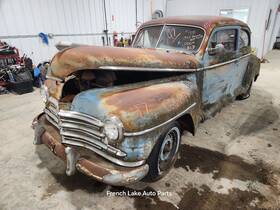
( Part Type: Manual Transmission ), ( Conditions Options: 218, Mt, Note ), ( Genuine Oem: Yes ), ( Ipn: 400.ch3s47 )
Review PLYMOUTH Manual Transmission 3-speed fits 400 1947
The **1947 Plymouth 400 CH3S47 with a manual transmission 3-speed gearbox** stands as a timeless relic of automotive ingenuity, embodying the bold spirit of post-war American engineering. Built upon the sturdy foundation of Plymouth s iconic "400" series, this model represents the pinnacle of mid-century craftsmanship, blending rugged reliability with a distinctive, understated elegance that has captivated enthusiasts for generations. The **CH3S47** designation signifies a classic "Special DeLuxe" trim, a designation that hints at its refined yet functional design, tailored for both practicality and performance on the open road. Under the hood, the engine a robust **236.5 cubic-inch inline-six** roars to life with a throaty, resonant growl, delivering a smooth yet powerful output of approximately **90 horsepower**, a formidable figure for its era. This inline-six, known for its durability and straightforward mechanics, was a staple of Plymouth s lineup, offering a balance of torque and efficiency that made it ideal for everything from daily commuting to spirited weekend drives.
The **three-speed manual transmission**, a hallmark of the era, provides a tactile and engaging driving experience, rewarding the driver with precise control and a satisfying clutch engagement. The **column-mounted shifter** a hallmark of 1940s design offers a nostalgic yet functional way to navigate gears, while the **synchromesh on the second and third gears** ensures smoother upshifts, a refinement that set Plymouth apart from its contemporaries. The drivetrain is complemented by a **live rear axle** with semi-floating rear springs, a design choice that enhances stability and load-bearing capacity, making this Plymouth equally adept at handling the demands of rural roads or the occasional off-road adventure. The **mechanical drum brakes** on all four wheels, operated by a simple pedal system, provide reliable stopping power, though they require a firm touch to engage fully a characteristic that adds to the car s authentic driving feel.
Externally, the **1947 Plymouth 400** exudes a bold, angular charm, defined by its **wide, sweeping fenders**, **distinctive grille with vertical slats**, and **rounded, streamlined bodywork** that reflects the transitional aesthetic of the late 1940s. The **two-tone paint scheme**, often featuring a contrasting lower body and upper panels, was a popular choice among buyers, adding a touch of sophistication to the car s utilitarian design. The **chrome-trimmed bumpers**, **door handles**, and **mirrors** catch the light with a gleaming brilliance, while the **split-window design** on the rear doors with their distinctive "Plymouth" script lends an air of classic distinction. Inside, the cabin is a study in functional simplicity, with **vinyl bench seating** that stretches across the width of the car, offering ample space for passengers. The **steering wheel**, typically a simple, unadorned unit, sits behind a **spoke dashboard** that houses essential gauges, including a **speedometer**, **fuel gauge**, and **oil pressure indicator**, all arranged within easy reach of the driver. The **manual window cranks** and **door latches** add to the car s hands-on appeal, inviting interaction and engagement with its mechanical charm.
Mechanically, the **1947 Plymouth 400 CH3S47** is a testament to the era s emphasis on durability and ease of maintenance. The **engine bay** is an open, accessible space, with components like the **distributor**, **spark plugs**, and **valve cover** easily reachable for routine upkeep. The **manual choke** on the carburetor allows for cold-weather starts, while the **mechanical fuel pump** ensures a steady supply of gasoline to the engine. The **drive shaft** and **universal joints** transmit power smoothly to the rear wheels, and the **spare tire**, mounted on the rear fender, is a practical nod to the roadside preparedness expected of a 1940s American car. Whether restored to showroom condition or preserved in its original patina, this Plymouth offers a glimpse into an era when automobiles were built to last, designed for the road, and celebrated for their unapologetic simplicity.
For the modern collector or enthusiast, the **1947 Plymouth 400 CH3S47** is more than just a vintage automobile it is a piece of automotive history that embodies the optimism and ingenuity of post-war America. Its **manual transmission**, **inline-six engine**, and **classic styling** combine to create a driving experience that is both nostalgic and deeply engaging. Whether cruising along a scenic coastal highway, navigating a quiet country lane, or simply enjoying the rhythmic clatter of the three-speed gearbox, this Plymouth invites its driver to slow down, appreciate the craftsmanship, and connect with the past in a way that few modern cars can replicate. With its blend of power, practicality, and timeless design, the **1947 Plymouth 400 CH3S47** remains a beloved icon of American automotive heritage.
### **Pros and Cons of Buying a 1947 Plymouth 400 with a CH3S47 Manual Transmission (3-Speed)**
#### **Pros**
1. **Classic American Muscle Car Heritage**
The 1947 Plymouth 400 is one of the earliest examples of a true American muscle car, predating the more famous Ford Mustangs and Chevy Camaros. It represents a rare and historically significant era of automotive design, blending post-war simplicity with early performance potential.
2. **Strong Engine Options**
The 1947 Plymouth 400 was available with a variety of inline-six engines, including the **239-cubic-inch "Straight Six"** (producing around **90 100 horsepower**), which was a solid powerplant for its time. While not as powerful as later V8s, it was reliable and capable of handling the manual transmission well.
3. **Manual Transmission (CH3S47 3-Speed)**
- The **CH3S47 three-speed manual transmission** was a common and well-regarded gearbox for its era, offering smooth shifting and decent durability.
- Manual transmissions in classic cars are highly desirable for enthusiasts who appreciate hands-on driving and the mechanical challenge of maintaining them.
- The simplicity of a three-speed manual makes it easier to repair than modern automatics, though it requires more frequent attention.
4. **Simplicity and Repairability**
- Unlike modern vehicles, the 1947 Plymouth has straightforward mechanical systems, making it easier to diagnose and fix common issues.
- Many parts are still available from specialty suppliers, and the car s basic design means fewer electronic components to fail.
- The lack of complex computer systems reduces the risk of costly diagnostics.
5. **Potential for Restoration and Customization**
- The 1947 Plymouth is a blank canvas for restoration, allowing owners to bring it back to original condition or modify it to their liking.
- Enthusiasts can experiment with engine swaps (such as later V8s), suspension upgrades, or even modern drivetrain modifications while keeping the original aesthetic.
- The car s age means that parts and labor costs for restoration are often lower than those for more recent classics.
6. **Driving Experience**
- For those who enjoy the tactile feel of a manual transmission, the 1947 Plymouth offers a raw, engaging driving experience.
- The car s weight and simple suspension make it forgiving to drive on modern roads, though it lacks modern safety features.
- The open cockpit and minimalist interior provide a nostalgic, driver-focused experience.
7. **Investment Potential (If Well-Preserved)**
- While not as valuable as a fully restored 1930s Ford or a rare muscle car, a well-maintained 1947 Plymouth can appreciate in value over time, especially if it is part of a collection of early American cars.
- Restored examples in good condition may attract collectors, particularly those interested in pre-war or early post-war automobiles.
---
#### **Cons**
1. **Extreme Age and Wear**
- At nearly **80 years old**, the car is likely to have significant wear in critical areas such as the **engine block, transmission, suspension, and chassis**.
- Rust is a major concern, especially in the frame, floor pans, and wheel wells. Many 1947 Plymouths suffer from structural corrosion that requires extensive welding and replacement.
- The **three-speed manual transmission** may have worn synchronizers, a slipping clutch, or a leaking gearbox, all of which require skilled mechanical work to repair.
2. **High Maintenance and Restoration Costs**
- Restoring a 1947 Plymouth to running condition can be **expensive**, often requiring new engines, transmissions, suspension components, and bodywork.
- Labor costs for classic car repairs are typically higher than for modern vehicles, and finding specialists familiar with pre-war mechanics can be difficult.
- Parts may be scarce or expensive, particularly for rare or discontinued components.
3. **Lack of Modern Safety Features**
- The car has **no seat belts, airbags, or modern safety standards**, making it unsafe for modern driving conditions.
- Visibility is limited due to the lack of power steering, and the manual transmission requires significant effort to shift gears.
- Modern traffic and road conditions (e.g., sharp turns, high-speed highways) are not well-suited to a car of this age and build quality.
4. **Reliability and Drivability Issues**
- Even with a manual transmission, the **engine may be struggling** the original inline-six was not designed for high-performance use, and later modifications (if any) may have weakened it further.
- The **suspension is basic**, with no shocks or modern dampening, leading to a bumpy ride.
- Electrical systems are minimal, with no modern ignition or fuel injection, making starting and performance inconsistent.
5. **Limited Practicality for Daily Use**
- The car is **not practical for daily commuting** due to its age, lack of modern amenities (AC, power steering, cruise control), and poor fuel efficiency.
- Insurance costs are likely to be **high** due to its age and lack of modern safety features.
- Parking and maneuvering in modern urban environments can be challenging due to its size and limited visibility.
6. **Market Availability and Condition Variability**
- Finding a **fully documented, well-preserved** 1947 Plymouth is rare. Many examples are either **rusted-out shells** or **heavily modified** with questionable parts.
- Buyers must be prepared to **thoroughly inspect** the car or have it professionally appraised before purchasing to avoid hidden issues.
- The car s value is heavily dependent on its **condition and provenance**, meaning a poorly maintained example may be worth little more than scrap.
7. **Ethical and Environmental Concerns**
- Restoring and maintaining a car of this age contributes to **carbon emissions** and resource consumption, which may not align with modern environmental values.
- Some enthusiasts argue that preserving such old cars is a **waste of resources** that could be better spent on newer, more efficient vehicles.
---
### **Conclusion**
The **1947 Plymouth 400 with a CH3S47 manual transmission** is a fascinating piece of automotive history, offering a glimpse into the early days of American car culture. It is a **great project car for enthusiasts** who are passionate about classic automobiles, have the **time, money, and mechanical skills** to restore it properly, and do not expect it to be a practical daily driver.
However, for **most modern buyers**, the cons outweigh the pros. The car is **extremely high-maintenance, unsafe for regular use, and likely to require significant investment** to bring it back to a drivable state. Unless you are a **restoration specialist, collector, or historian**, the practical and financial burdens of owning such an old vehicle may not be justified.
### **Recommendation**
- **Buy it only if:**- You are an **enthusiast with mechanical experience** and the **resources** to restore it properly.
- You are purchasing it **specifically for restoration or display**, not as a daily driver.
- You have **verified its structural integrity** (no major rust) and **documented its condition** before buying.
- You are prepared for **high costs** in parts, labor, and potential hidden issues.
- **Avoid it if:**- You need a **reliable, safe, and practical** vehicle for daily use.
- You lack **mechanical knowledge** or the **budget** to handle the restoration.
- You are not passionate about **classic cars** and their preservation.
- You expect the car to **run well out of the box** without extensive work.
For most people, a **well-maintained classic car from the 1950s 1970s** (such as a Ford Thunderbird, Chevrolet Bel Air, or early Mustang) would be a **more practical and enjoyable** choice while still offering historical value. The 1947 Plymouth is best suited for **serious collectors, restorers, or those with a deep appreciation for automotive history**.
Details:
Steering Columns: All steering columns sold will come without airbags. Limited Warranty Coverage. Axles Assemblies: Axle assemblies will not include any brake hardware: Calipers/Rotors/Shoes/Pads/Hoses/Brake Lines.
Bumper assemblies DO NOT come with Upper Grilles unless stated. No expedited shipping is available. The part is not a special order. Please remember you are purchasing OEM Original Equipment Manufacturer USED parts.
Labor and Related Costs: This limited warranty does not cover labor, diagnostics, towing, rental car costs, or any other expenses related to the installation, testing, removal, replacement of a part. Bolt-on items The part has not been altered, modified, disassembled, overheated or damaged. All parts sold as is except expressly provided below.
Brokered/non-stocked parts ordered specifically for your request. Sensors, valve covers, timing covers attached to core short/long blocks are not covered. Normal wear and tear from the previous use is expected. The part is not a custom body cut.
The part has not been installed. Check the Q A section for Business Support. Convenience Items: Items attached to or included with the part, such as wiring, bulbs, sockets, sensors, coils, distributor caps, spark plugs, water pumps, filters, brake parts, backing plates, hoses, vacuum lines, u-joints, timing belts/components, similar items, are considered convenience items and not covered by this limited warranty.
Dispute Resolution. Scope: This limited warranty covers defects in the purchased part that render it inoperable or defective within 90-day period. Exclusions from Limited Warranty. Transmissions: Transmissions will come with the torque converter and all sensors.
Any bulbs or wiring still attached to the,Tail Light,assemblies are not warranted part of the listing in any way.
part #: 400.ch3s47 price
- $150.00
specifications autotransmissionsgo:
- for makes: Plymouth
- for years: 1947
- part type: Manual Transmission
- conditions options: 218, Mt, Note
- genuine oem: Yes
- ipn: 400.ch3s47
offer autotransmissionsgo:
- options: Ship-to-home
- started: April 11, 2026
- quantity: 1
- sold: 0
- availability: In Stock
shipping autotransmissionsgo:
- class: Standard
- service: Standard
- cost: $85.00
- transit: 3-5 Days
- type: Fixed
general autotransmissionsgo:
- Car Truck Parts Accessories > Transmission Drivetrain > Automatic Transmission
- condition: Used
returns autotransmissionsgo:
- policy: Returns Accepted
- time: 30 Days
- paid by: Buyer
payments autotransmissionsgo:
- wallet: Apple-pay
- credit card: Diners-club
- other
seller autotransmissionsgo:
- # reviews: 45557
- city: Annandale, Minnesota
- rating: 99.6%
Plymouth 1339261 Is Similar To:
- 68219825ab Rl219825ab Plymouth Transmission For Compass At Compasold (39.1% similar) 4l at 1k notes: is it for sale. Q: I see a different part on this vehicle that would like to buy. A: sorry, but you cannot...(March 31st, 2018)
- 8cyl-318 Duster Automatic Plymouth Transmission 1972 185037 (45.2% similar) Electronic items do not come with a warranty. If an item arrives damaged, please via message within 24 hours for instructions. T, W/O lock up converter charger. 9 axle ratios diplomat 78. 77 a Valarie 78. T, A94 1 barracuda. T, W/O lock up converter charger 78. Ition, A94 1, W/O lock up converter ...(August 13th, 2015)
- 1998 Dodge Stratus 2.4L 41TE Transmission Assembly Vin X Cirrus Plymouth Sebring (34.5% similar) It will come exactly with what is pictured including the torque converter. The transmission fluid is nice and bright with hardly any material on the magnet. Do you like what you see or perhaps looking for something else. Part details this listing is for the transmission assembly. 4l 148 4 cylinder, ...(March 13th, 2014)
- 1939 Plymouth Transmission 679887 Nors (48.5% similar) 1939 plymouth transmission 679887 Norse. Item appears to be Norse to my knowledge. Item is in great condition with minimal oxidation. New other see details condition...(September 19th, 2022)
- Jeep plymouth Truck 400-10481 Automatic Transmission Engine Id Ede 9 Speed 4wd Fits 18 Compass (51.6% similar) This part is out of the vehicle and ready to ship. Automatic transmission engine id Dee 9 speed 4WD fits 18 compass 3521598 this part was removed from a 2018 with 36000 miles on it. Notes: AT,2.4L,7/18. Donor vehicle model: compass year: 2018 mileage: 36000 not available or unknown stock number...(January 4th, 2024)
- Jeep plymouth Truck 400-10475 Automatic Transmission Engine Id Ede 6 Speed Fwd Fits 17-20 Compass (53.1% similar) Part detail see help. Note: image shown may be the vehicle from which part was pulled, or a generic image representing typical stock, rather than unique item being sold. Part placement. Our doors include glass, exterior handle and window regulator/motor. Automatic transmission engine id Dee 6 speed ...(January 23rd, 2024)
- Jeep plymouth Truck 400-10817 Compass 2019 Automatic Transmission Engine Id Ede 9 Speed 4wd (46.2% similar) Adjust shiftier and kick down cables linkage if applicable. Warranty is not transferable. All the above installation should be in accordance with manufacturer guidelines including proper quantity and fill levels of fluids any technical service bulletins updates. Find parts online. Failure caused by ...(April 18th, 2024)
- Plymouth 400-01128b Core Assembly Automatic Transmission 383 Fits 1970 Barracuda (53.8% similar) Super bee, dodge pass. 76 at; 8-4 4BC, 240 hp, dodge pass. 72-74 at; 8-4 4BC, dodge pass. If shipping USPS ship to: Keenan bros. 70-71 at; 8-383, 4BC, dodge pass. 68-69 at; 8-383, 4BC, excl. Road runner, plymouth pass...(August 12th, 2024)
- Jeep plymouth Truck 400-10892 Automatic Transmission Engine Id Ede 9 Speed 4wd Fits 19 Compass 465393 (51.8% similar) No expedited shipping options are available at this time...(August 30th, 2024)
- Dodge 400-04640 I-4 4 Plymouth Manual Transmission Case Only With Turbo 2004 2005 04 05 Neon Srt (46% similar) Use to street race an SRT4 this is a spare trans case. Bearing races and everything is good. Was in my race car trailer...(September 8th, 2024)
- Jeep plymouth Truck 400-10482 18 Compass Transmission E779511 (48.4% similar) This includes business name, address, and phone number for delivery. Warranty time period. All claims must be accompanied by the part and original sales receipt. We respond to messages 8AM-5PM m-f CST. Whats included: help message shipping. 2.4L,LOW miles,ran WELL,1-YEAR,3-YEA. 3 year warranty. This...(October 3rd, 2024)