LOTUS 400.LO1O70 Europa Manual Transmission
fits model: Rwd, 400. year: 1970.
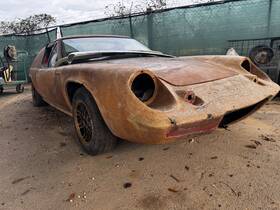
( Brand: Lotus ), ( Model: EUROPA ), ( Conditions Options: Manual Transmission Rwd Europa ), ( Genuine Oem: Yes ), ( Ipn: 400.lo1o70 ), ( Descriptionpartcondition: 1970 Lotus Europa Oem Manual Transmission Rwd ), ( Manufacturer Warranty: 90 Day ), ( Type: Manual Transmission )
Review LOTUS Europa Oem Manual Transmission fits RWD 400 1970
The **Lotus Europa S1 (Type 400, LO1070) from 1970** is a legendary masterpiece of automotive engineering, embodying the spirit of British sports car design at its most refined and exhilarating. Built upon the iconic Lotus Europa s already razor-sharp chassis a lightweight, tubular steel backbone structure this model represents the pinnacle of Colin Chapman s philosophy: *less is more*. With its handcrafted precision and uncompromising focus on performance, the S1 stands as a testament to Lotus s relentless pursuit of speed, agility, and driver engagement. The bodywork, crafted from hand-formed aluminum panels, is a study in aerodynamic efficiency and understated elegance, featuring sharp, angular lines that reduce drag while maintaining a timeless, almost sculptural presence. The iconic "Europa" nameplate sits proudly at the front, flanked by sleek, low-profile headlamps that blend seamlessly into the car s minimalist aesthetic.
Under the hood, the S1 is powered by Lotus s own **1.6-liter twin-cam engine**, a masterfully tuned unit that produces a spirited **110 horsepower** a figure that may seem modest by modern standards but was revolutionary in its day, especially when paired with the car s razor-thin weight of just **750 pounds (340 kg)**. This powerplant, with its high-revving nature and linear power delivery, is a symphony of mechanical poetry, its exhaust note a throaty growl that resonates with the driver s every shift. The manual transmission, a five-speed gearbox with close ratios, is a driver s dream, offering effortless engagement and a direct connection to the road. Mated to a limited-slip differential and a rigid, live rear axle, the S1 delivers a driving experience that is both visceral and precise, with rear-wheel drive (RWD) dynamics that reward patience and skill while punishing the unwary with a tail that can be as playful as it is punishing.
The interior of the S1 is a study in functional minimalism, with its sparse yet high-quality appointments reflecting Lotus s commitment to performance over luxury. The two-seater cockpit is wrapped in supple leather or vinyl, depending on the specification, with a simple but effective dashboard housing essential gauges speedometer, tachometer, fuel, and oil pressure all within easy reach of the driver. The steering wheel, typically a lightweight, three-spoke unit, is mounted on a short, direct column, ensuring that every turn of the wheel translates directly into the car s response. The seats, often bench-style or bucket-style depending on the model year, are designed for support and grip, locking the driver in place for the thrilling ride ahead. The absence of unnecessary weight or ornamentation means that every ounce of the car s performance is directed toward the road, making the S1 feel alive in a way few cars ever have.
The Europa S1 s handling is nothing short of legendary, a perfect blend of understeer and oversteer that keeps the driver perpetually engaged. The car s low center of gravity, achieved through the chassis design and the placement of the engine, allows it to carve corners with effortless precision, while the independent rear suspension ensures that the rear wheels remain planted even under hard cornering. The brakes, typically a simple but effective drum setup in early models or upgraded to discs in later iterations, provide adequate stopping power for the car s modest weight, though enthusiasts often seek aftermarket upgrades to match the car s modern performance expectations. On open roads, the S1 glides effortlessly, its lightweight frame and aerodynamic bodywork slicing through the air with minimal resistance, while its high-revving engine rewards the driver with a soundtrack that is as thrilling as it is nostalgic.
Ownership of a Lotus Europa S1 is not merely about driving a classic car; it is about experiencing a piece of automotive history that remains as relevant today as it was in 1970. The S1 is a car that demands respect, offering a driving experience that is both challenging and rewarding, a true test of skill and reflexes. Its rarity fewer than 1,000 were produced ensures that it remains a coveted collector s item, a symbol of British ingenuity and a rolling tribute to the golden age of sports car design. Whether cruising along a coastal road in England or tackling a twisty mountain pass in the Alps, the S1 never fails to inspire awe, its legacy as enduring as the roads it was built to conquer.
### **Pros and Cons of Buying a 1970 Lotus Europa (LO1070) with Manual Transmission and RWD**
#### **Pros**
1. **Iconic British Design and Legacy**
The Lotus Europa is one of the most recognizable and revered sports cars of the 1960s and 70s. Its sleek, minimalist design with its distinctive pop-up headlights, lightweight construction, and aerodynamic silhouette remains a symbol of British automotive craftsmanship. Owning one connects you to a storied heritage in motorsport and automotive innovation.
2. **Lightweight and Agile Handling**
The Europa was built around the principle of "less is more," with a fiberglass body (later steel) mounted on a tubular steel frame. This construction keeps weight to a minimum, resulting in exceptional agility, precise steering, and a nimble driving experience. The RWD layout ensures a balanced, engaging rear-wheel-drive dynamics that enthusiasts appreciate.
3. **Manual Transmission Suitability**
The Europa was originally offered with a 4-speed manual transmission (or a 5-speed in later models), which complements its lightweight nature perfectly. A well-maintained manual transmission in this car can be a joy to drive, offering direct engagement with the engine and a more authentic Lotus experience. Many owners prefer the tactile feel of a manual over an automatic.
4. **Strong Engine Options**
The LO1070 (the 1970 model) typically came with Lotus s own 1.6-liter or 1.9-liter inline-four engine, producing around 110 125 horsepower, depending on tuning. These engines are known for their smoothness, reliability (when properly maintained), and ability to rev enthusiastically. The lightweight nature of the car means even modest power outputs translate into impressive acceleration and top speeds.
5. **Classic Car Status and Investment Potential**
As a rare and well-preserved example of Lotus s early work, the Europa holds value in the classic car market. Properly restored or well-maintained examples can appreciate over time, especially if they are rare variants (e.g., early fiberglass-bodied models or low-mileage examples). The car s exclusivity and cult following also contribute to its desirability.
6. **Driving Experience and Fun Factor**
The Europa is often described as a "driver s car" due to its lightweight chassis, responsive handling, and engaging road manners. It s not a brute-force machine but rather a car that rewards skill and precision. The lack of modern electronics means the driver is fully in control, which appeals to purists and enthusiasts who prioritize driving enjoyment over luxury.
7. **Modification Potential**
The Europa has a dedicated aftermarket community that offers parts for restoration, upgrades, and customization. Engines can be swapped for more powerful options (e.g., Ford Kent, Rover V8, or even modern turbocharged setups), suspension can be tuned for track use, and interiors can be refreshed. This flexibility allows owners to tailor the car to their preferences.
8. **Nostalgic and Exclusive Appeal**
The Europa is not a common car, and owning one places you in a small but passionate community of Lotus enthusiasts. Its rarity adds to its charm, making it a conversation starter and a source of pride for collectors and drivers alike.
---
#### **Cons**
1. **High Maintenance and Restoration Costs**
The Europa s lightweight construction, while an advantage in terms of handling, makes it susceptible to rust, especially in critical areas like the chassis, suspension, and body panels. Fiberglass-bodied early models are particularly prone to delamination and rot, while steel-bodied later models (like the LO1070) can still suffer from corrosion if not properly maintained. Restoration or even routine maintenance can be expensive, requiring specialized knowledge and parts.
2. **Reliability Concerns**
While the engines are robust, they are not immune to wear. The 1.6L and 1.9L inline-four engines can develop issues with timing chains, water pumps, or head gaskets over time. The manual transmission, if not well-maintained, can also be finicky, requiring frequent attention to gears and synchronizers. Electrical systems in older Lotuses can be unreliable, with issues like failing wiring harnesses or alternators being common.
3. **Limited Practicality**
The Europa is a two-seater with minimal storage space. Its small size means it s not practical for daily use, especially for taller drivers or those who need to carry passengers or cargo regularly. The lack of modern amenities (e.g., power steering, air conditioning, or advanced safety features) also makes it less suitable for everyday driving.
4. **Driving Challenges**
While the car is fun to drive, its lightweight nature means it can be sensitive to crosswinds, uneven roads, or aggressive driving. The lack of modern stability control or traction control can make it less forgiving on high-speed roads or in adverse conditions. Additionally, the manual transmission can be stiff or noisy if not properly serviced.
5. **Parts Availability and Cost**
Finding original or aftermarket parts for an Europa can be difficult and expensive. While the aftermarket has improved over the years, some components (e.g., fiberglass body panels, specific suspension parts, or wiring harnesses) may require sourcing from specialty suppliers or restoring from donor cars. This can add to the overall cost of ownership.
6. **Insurance and Legal Considerations**
Classic cars like the Europa can be expensive to insure, especially if they are high-value or modified. Some insurers may also have restrictions on how the car is used (e.g., limited to classic car rallies or track days). Additionally, modern legal requirements (e.g., emissions standards, safety equipment) may necessitate modifications that some owners are unwilling to make.
7. **Weather and Comfort Limitations**
The Europa s open-cockpit design (or minimal roof options) means it s not ideal for cold or inclement weather. The lack of insulation, heating, or soundproofing makes it uncomfortable for long drives, especially in winter. The seats are also basic, offering little support for extended periods.
8. **Performance Limitations**
While the Europa is quick for its size, its power-to-weight ratio is modest by modern standards. The 1.6L or 1.9L engines are not as powerful as contemporary sports cars, and acceleration can feel sluggish compared to modern turbocharged or V8-powered machines. The top speed is also limited (around 110 120 mph, depending on the model), which may not appeal to those seeking high-speed performance.
9. **Depreciation and Market Volatility**
While some classic cars appreciate in value, the Europa s market can be volatile. Factors like economic conditions, rarity of the specific model, and restoration quality can affect its resale value. Unlike more common classics (e.g., Porsche 911 or MG MGB), the Europa s niche appeal means its value may not be as stable.
10. **Driving Skill Required**
The Europa rewards skillful driving but punishes mistakes. Its lightweight chassis means it can be easily oversteered or understeered, requiring confidence and precision from the driver. Beginners or inexperienced drivers may find it challenging to handle, especially on twisty roads or in high-speed maneuvers.
---
### **Conclusion**
The 1970 Lotus Europa (LO1070) with manual transmission and RWD is a remarkable piece of automotive history that offers an unparalleled driving experience for enthusiasts who appreciate classic British engineering, lightweight handling, and the thrill of a manual transmission. Its iconic status, agility, and modification potential make it a dream car for collectors and drivers who prioritize fun and legacy over practicality.
However, the car s high maintenance requirements, reliability concerns, and limited practicality mean it is not a suitable choice for casual drivers or those seeking a daily vehicle. The costs associated with restoration, parts, and insurance can be prohibitive, and the driving experience while exhilarating demands skill and patience. For the right owner, the Europa is a joy to own and drive; for others, it may be a costly and impractical passion project.
### **Recommendation**
**Buy the Lotus Europa if:**- You are a passionate classic car enthusiast with the budget and time to properly maintain and restore the vehicle.
- You prioritize driving enjoyment, handling, and the unique Lotus experience over modern conveniences or practicality.
- You have access to a garage, mechanical skills, or a trusted mechanic to handle routine maintenance and potential issues.
- You are prepared for the possibility of high insurance costs and limited resale value compared to more common classics.
- You plan to use the car sparingly (e.g., for track days, rallies, or weekend driving) rather than as a daily driver.
**Avoid the Lotus Europa if:**- You are looking for a practical, low-maintenance, or modern vehicle.
- You lack the mechanical knowledge or budget to address potential rust, engine, or transmission issues.
- You are not prepared for the emotional and financial commitment of owning a classic car.
- You prioritize power, speed, or luxury over the unique charm and challenges of a lightweight sports car.
- You cannot store the car in a dry, secure environment to prevent further deterioration.
For those who meet the criteria, the Europa is an incredible investment in both passion and automotive heritage. For others, it may be wiser to consider more modern or practical alternatives that offer a balance of fun and feasibility.
Details:
Hospitals, Schools, Farms, storage Units, Home Business, Airports, No Truck/Limited Access zones and Military Bases are not accepted as a valid commercially zoned address. 1970 Lotus Europa OEM Manual Transmission RWD: Some vehicles have different specs that must be matched to ensure fit. Not just our Heritage, but Legacy 1970 Lotus Europa OEM Manual Transmission RWD. Orders placed after 2:00 pm CST cannot be guaranteed shipping that day.
Transmissions are drained prior to shipping. Manufacturers specified fluid types must be used. All seals, gaskets, and filters must be replaced prior to install in order maintain warranty.
On AWD/4x4 transmissions, the transfer case will not be included.
specifications autotransmissionsgo:
- for models: Rwd, 400
- brand: Lotus
- model: Europa
- conditions options: Manual Transmission Rwd Europa
- genuine oem: Yes
- ipn: 400.lo1o70
- descriptionpartcondition: 1970 Lotus Europa Oem Manual Transmission Rwd
- manufacturer warranty: 90 Day
- type: Manual Transmission
offer autotransmissionsgo:
- quantity: 1
- options: Ship-to-home
- best offers: True
- sold: 0
- availability: In Stock
- started: March 19, 2026
seller autotransmissionsgo:
- city: Mobile, Alabama
- rating: 99.7%
- # reviews: 61476
shipping autotransmissionsgo:
- service: Flat Rate Freight
- cost: $300.00
- class: Freight
- type: Fixed
payments autotransmissionsgo:
- wallet: Apple-pay
- other
- credit card: Diners-club
general autotransmissionsgo:
- Car Truck Parts Accessories > Transmission Drivetrain > Automatic Transmission
- condition: Used
returns autotransmissionsgo:
- paid by: Buyer
- policy: Returns Accepted
- time: 30 Days