FORD BT1P700 Transit Connect Automatic Transmission 2.0L
fits make: Ford. year: 2011–2013.
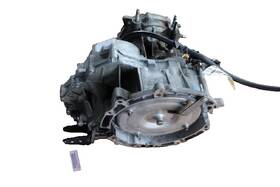
( Manufacturer Part Number: BT1P700 ), ( Type: Automatic Transmission ), ( Country Of Origin: United States )
Review FORD Transit Connect 2.0l Speed Automatic Transmission fits 2011–2013
The **Ford BT1P700 (2011 2013) 2.0L Transit Connect with Automatic Transmission** is a compact yet versatile commercial vehicle designed to deliver exceptional efficiency, reliability, and practicality for urban delivery, light cargo transport, or small-scale business operations. Engineered with Ford s proven **2.0L Duratec I4 engine**, this engine produces a smooth and responsive **125 horsepower** and **125 lb-ft of torque**, offering a balanced blend of power and fuel economy ideal for navigating city streets with ease while maintaining the capability to handle moderate loads. The **6-speed automatic transmission** ensures seamless gear shifts, reducing driver fatigue during stop-and-go traffic or frequent starts and stops, making it a preferred choice for delivery drivers, tradespeople, and small business owners who prioritize both comfort and productivity.
The **BT1P700 chassis** is built on Ford s robust **C2 platform**, sharing structural integrity with the popular Ford Focus, which translates to a sturdy yet lightweight frame that enhances maneuverability in tight spaces. With a **wheelbase of 92.5 inches**, the Transit Connect strikes an ideal balance between compact size and cargo capacity, accommodating up to **37.5 cubic feet of interior space** when configured as a cargo van, or up to **12 passengers** when outfitted with seating. The **low ground clearance (7.5 inches)** and **narrow width (67.3 inches)** make it one of the most easily parkable commercial vehicles on the road, slipping effortlessly into standard parking spots without the need for extra maneuvering. The **high roof option** further expands cargo volume, while the **sliding side door** and **rear liftgate** provide convenient access for loading and unloading goods, whether it s parcels, tools, or equipment.
Ford s **Ford EdgeLink infotainment system** (available in later 2012 2013 models) adds a layer of modern convenience, featuring an **8-inch touchscreen display** with Bluetooth connectivity, USB ports, and optional navigation, ensuring drivers stay connected while on the road. The **standard Ford SYNC system** (in earlier 2011 models) offers hands-free calling and audio control via voice commands, enhancing safety and reducing distractions. Safety is also a priority, with features like **stability control, traction control, and multiple airbags** (including side-impact protection) designed to protect both the driver and any passengers. The **standard 15-inch steel wheels** (with optional 16-inch alloys) and **disc brakes on all four corners** provide reliable stopping power, while the **rear-wheel drive configuration** (or optional front-wheel drive in some markets) ensures stability on varied surfaces.
Maintenance and durability are key selling points of the **2011 2013 Transit Connect**, as Ford s **PowerShift transmission** (in some markets) or the **6-speed automatic** is paired with a **durable oil pump and cooling system** to extend engine life. The **fuel-efficient design** achieving up to **22 city/30 highway MPG** helps reduce operational costs, making it a cost-effective choice for businesses looking to minimize fuel expenses. Additionally, the **modular cargo bay** allows for easy customization with aftermarket shelving, toolboxes, or refrigeration units, catering to a wide range of commercial applications, from food delivery to handyman services. With its **low total cost of ownership**, **reputation for reliability**, and **versatile utility**, the **Ford BT1P700 Transit Connect** remains a standout compact commercial vehicle for those who demand performance without sacrificing practicality.
### **Pros and Cons of Buying a Ford Transit Connect (2011 2013, 2.0L, Automatic Transmission)**
#### **Pros:**1. **Compact Size and Maneuverability** The Transit Connect is one of the smallest commercial vans, making it ideal for urban driving, tight parking spaces, and navigating narrow streets. Its short wheelbase and low height make it easier to handle than larger vans.
2. **Versatile Cargo Space** Despite its small size, it offers a surprisingly useful cargo area. The sliding side door and rear liftgate provide easy access, and the interior can be configured for cargo, passenger seating, or a mix of both. The foldable rear seats expand utility.
3. **Fuel Efficiency** The 2.0L Duratec engine (a modified version of the Ford Focus engine) is relatively efficient for its class, offering better mileage than many larger vans. In automatic mode, it typically achieves around **18 22 MPG combined**, which is decent for a commercial vehicle.
4. **Affordable Purchase and Maintenance Costs** Compared to larger vans (e.g., Ford Transit, Mercedes Sprinter), the Transit Connect is cheaper to buy used and has lower insurance and fuel costs. Parts and labor are also generally less expensive than for high-end commercial vans.
5. **Durability and Reliability** The 2.0L Duratec engine is known for its longevity when properly maintained. Many owners report few major issues if routine servicing is followed. The automatic transmission (a 4-speed Ford A6AF2) is also relatively robust for its age.
6. **Availability of Parts and Accessories** As a Ford, it benefits from a wide network of dealerships, mechanics, and aftermarket parts. Modifications like roof racks, cargo organizers, and lift kits are widely available.
7. **Good for Sidewalk Delivery and Local Businesses** Its size makes it perfect for businesses like food delivery, small package services, or tradespeople who need to carry tools and materials without sacrificing maneuverability.
8. **Comfortable Interior for Short Trips** The cabin is spacious enough for two passengers comfortably, with decent legroom and headroom. The automatic transmission makes it easier to drive in stop-and-go traffic.
---
#### **Cons:**1. **Limited Cargo Capacity** While useful for small-scale operations, the cargo area is very tight. Maximum load capacity is around **1,500 1,800 lbs**, but usable space is constrained. Tall or bulky items may not fit well.
2. **Poor Off-Road or Rough-Terrain Capability** The Transit Connect is a city van, not a rugged vehicle. Its low ground clearance and lack of suspension tuning make it uncomfortable on rough roads or unpaved surfaces.
3. **Engine Power Limitations** The 2.0L Duratec engine (140 150 hp) is adequate for city driving but struggles with heavy loads or steep inclines. Towing capacity is minimal (around **1,200 1,500 lbs**), which limits its utility for some commercial uses.
4. **Automatic Transmission Reliability Concerns** Some owners report issues with the automatic transmission (A6AF2) over time, including rough shifting or failure in high-mileage examples. Regular transmission fluid changes are crucial.
5. **Resale Value Depreciation** Like most small commercial vans, the Transit Connect loses value quickly. If you plan to sell it later, expect a lower resale price compared to newer models.
6. **Limited Passenger Comfort on Long Trips** The cabin is cramped for extended drives. There s little legroom for the rear passenger, and the seating is basic.
7. **Noise and Vibration at Higher Speeds** On highways, wind and road noise can be noticeable, and the suspension isn t tuned for smooth long-distance travel.
8. **Fuel Economy Drops with Load** When carrying cargo, MPG can drop significantly (sometimes below **15 MPG**), increasing operating costs.
9. **Outdated Safety Features (for Older Models)** The 2011 2013 models lack modern safety tech like standard stability control, advanced airbag systems, or blind-spot monitoring. Side-impact protection is also limited compared to newer vans.
10. **Potential Rust Issues** Older Ford vans, especially those driven in snowy or salted climates, can develop rust in wheel wells, undercarriage, and frame. A thorough inspection is essential before purchase.
---
### **Ending Conclusion:**The **Ford Transit Connect (2011 2013, 2.0L, automatic)** is an excellent choice for **urban-based businesses, sidewalks delivery, tradespeople, or individuals needing a compact, fuel-efficient work van**. Its strengths lie in its **size, maneuverability, and affordability**, making it ideal for **light-duty commercial use, personal transport, or small-scale cargo needs**. However, it is **not suited for heavy-duty work, long-distance travel, or rough terrain**. Buyers should prioritize **maintenance history, rust inspection, and transmission condition** when purchasing a used example.
If you need **more power, cargo space, or modern safety features**, consider a **newer Transit Connect (2014 )** or a **larger van like the Ford Transit (2015 )**. But for **budget-conscious buyers who prioritize compact size and city usability**, the 2011 2013 model remains a practical option with proper care.
---
### **Recommendation:**- **Buy if:** You need a **small, affordable van for city driving, light cargo, or personal use** and can maintain it regularly. It s perfect for **food delivery, handyman work, or running errands** where size and fuel efficiency matter more than power.
- **Avoid if:** You require **heavy towing, large cargo capacity, off-road capability, or long-distance comfort**. In that case, a **newer model or a different van** would be a better investment.
- **Inspection Checklist Before Purchase:**- **Engine:** Listen for unusual noises; check for oil leaks or excessive smoke.
- **Transmission:** Test shifting smoothly; look for delayed engagement or rough shifts.
- **Suspension:** Inspect for worn shocks, bushings, or excessive play in joints.
- **Rust:** Check wheel wells, frame, and undercarriage for corrosion.
- **Electrical:** Test all lights, windows, and accessories.
- **Maintenance Records:** Verify oil changes, timing belt (if applicable), and transmission fluid service history.
- **Budget Considerations:** Expect to pay **$5,000 $10,000** for a **low-mileage, well-maintained example** (under 100,000 miles). Higher-mileage units may require more investment in repairs.
For the best value, **aim for a 2012 model** it s often the sweet spot between reliability and availability. Always **test drive thoroughly** and consider a **pre-purchase inspection** by a trusted mechanic.
Details:
Replace the radiator or cooler if recommended by manufacturer. The recipient vehicle is converted from a private passenger use to commercial or fleet use, used for racing other competition off-road recreational purposes. Ensure the purchased transmission is materially same as one to be replaced. Service is not reimbursable.
Exchange the oil pan and pick-up tube. Exchange attached accessory items to insure proper fit mounts, intake manifold, exhaust distributor, sensors. Fill the transmission with OEM recommended fluids. Inspect and replace gaskets seals front seal, rear main valve cover gaskets, oil pan.
If equipped with an engine oil cooler the radiator or external must be replaced. The part is installed or operated outside the USA. The part fails or becomes defective due to the vehicle being involved in a collision. The below installation checklist is not followed accordingly.
Warranty does NOT cover labor, diagnostic, towing or rental car costs. Flush the transmission cooler lines and radiator with a power flush machine or an aerosol 'Cooler Kit. If included, these parts are sold AS-IS with NO WARRANTY and were included to help protect the engine during storage shipping. Disable fuel/ignition before attempting to start engine.
Ensure the cooling system is flushed and functioning properly. Clear all computer diagnostic codes from the vehicle prior to installing. Ensure this engine you are purchasing is the same application as one being replaced. The parts failure is caused by abuse, misuse, or modifications.
Verify the differential portion of transmission is full fluid. Transfer cases are not included with transmission from AWD automobiles. This will allow the oil to prime as indicated by manufacturer. Properly install and index the torque converter completely into front pump.
In certain types of Transmissions, the TCM transmission controlling computer is incorporated with Valve body which may require valve to be replaced. Remove oil pan and replace filter, remove torque converter strap front seal. Replace the timing belt and water pump Install replacement spark plugs wires. All crankshaft bolts that are drilled through sealant must be applied to avoid leaks.
Inspect and replace rear seal as needed, change over sensors needed. Clear all transmission computer codes in the vehicle prior to starting or operating. Examples of these non-warranty parts include switches, sensors, cables, coils, wires, injectors, electronics, belts including timing belt/chain, hoses, water pumps, brackets, intake/exhaust manifolds, oil pans and turbos/superchargers if equipped. Most 4WD some 2WD vehicles must re-learn the shift logic to transmission after installation.
This will ensure the cooling system is flowing. Drain excess oil and coolant from exhaust system. Replace engine oil, oil filter, air fuel filters, coolant-antifreeze.
part #: bt1p700 prices
- $400.51-$2550.00
specifications autotransmissionsgo:
- for makes: Ford
- for years: 2011-2013
- mpn: Bt1p700
- type: Automatic Transmission
- country of origin: United States
seller autotransmissionsgo:
- rating: 98.3%
- city: Las Cruces, New Mexico
- # reviews: 355
payments autotransmissionsgo:
- other
- wallet: Paypal
- credit card: Mastercard
shipping autotransmissionsgo:
- cost: $225.00
- class: Freight
- type: Fixed
- service: Flat Rate Freight
general autotransmissionsgo:
- condition: Used
- Car Truck Parts Accessories > Transmission Drivetrain > Automatic Transmission
offer autotransmissionsgo:
- quantity: 1
- started: February 8, 2026
- availability: In Stock
- best offers: True
- sold: 0
- options: Ship-to-home
returns autotransmissionsgo:
- policy: Returns Accepted
- paid by: Buyer
- time: 60 Days
Ford BT1P700 Is Similar To:
- 05-06 FORD E250 REBUILT AUTOMATIC TRANSMISSION 4R75W 6 MONTHS WARRANTY Core req (11.3% similar) Core return is required...(April 13th, 2014)
- 05 Ford Crown Vic Automatic (35.8% similar) Adjust throttle position sensor cable. Pre-installation requirements: replace all seals. Transmission installation procedures: prior to of your used we require these steps be taken for warranty valid. Engines are guaranteed against knocking and excessive smoking. Clear all transmission computer ...(January 7th, 2018)
- 05 Ford Expedition Automatic Transmission (51.7% similar) Replace thermostat gasket. 4L, 3V, 4X4 warranty guarantee orthodox auto co. Replace oil pan gasket and rear main seal. Flush cooling system and re-fill. Adjust throttle position sensor cable. If needed replace timing gears, chains or belts gaskets. Install new filter kit. Pre-installation ...(September 25th, 2017)
- 09 Ford Crown Vic Automatic (35.8% similar) Replace valve cover gaskets. Install new filter kit. This engine comes with a 30 day part only warranty. Replace thermostat gasket. Replace oil pan gasket and rear main seal. Clear all transmission computer codes prior to starting or operating vehicle. Adjust throttle position sensor cable. Pre-...(January 7th, 2018)
- Automatic 100605 Ford Taurus Transmission 02 01 03 (34.1% similar) 0,FLR this part will fit these makes and model's with these options sable...(December 27th, 2014)
- TRANSMISSION FORD F150 PICKUP 1011826 07 08 4.2L AT 112K (25.2% similar) This is a parts replacement warranty only. Our transmissions come with a 120 day parts only warranty...(March 16th, 2014)
- Escape Mazda 03 Automatic 101819 3.0l 04 4x2 Ford 3l8pga Transmission Tribute (35.9% similar) After install, change transmission fluid at proper intervals in accordance with vehicle manufacturer guidelines. 4X2 Mazda tribute. Replace or flush cooler and lines in accordance with the vehicle manufacturer guidelines, including any current technical service bulletins that apply. Daytime phone ...(November 18th, 2014)
- 00 99 102443 Transmission 2.5l Automatic Ford Ranger 01 (31.3% similar) 5,AT this part will fit these makes and model's with these options ranger. If necessary you can call us with your credit card information. Read carefully. Electrical parts computers, modules, switches, and sensors do not carry any warranty sold as is. Expedited shipping is only available if ...(February 3rd, 2015)
- Transmission 00 99 10296 F150 04 02 01 03 Manual Ford (18.2% similar) No expedited shipping is available. Ford F150 manual transmission F150 manual transmission. If an item arrives damaged, please via message within 24 hours for instructions. N new part manufactured from scratch. This part comes with a parts only warranty. Seals and gaskets must be replaced. Warranty ...(August 9th, 2014)
- Taurus 103552 99 Automatic Transmission Ford (47.2% similar) No expedited shipping is available. 0,COL this part will fit these makes and model's with these options Taurus...(February 14th, 2015)
- Mustang Transmission 105613 Ford Automatic Sohc 4.0l 5 Speed 06 05 (22.1% similar) 0,AT this part will fit these makes and model's with these options mustang. Electrical parts computers, modules, switches, and sensors do not carry any warranty sold as is. Read carefully...(February 21st, 2015)