HONDA S20-1035814 Eg Manual Transmission 1.5L 1.6L
fits model: S20, Civic. make: Honda. year: 1992–1995.
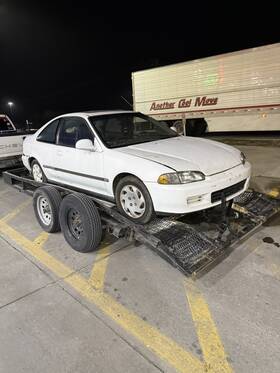
( Manufacturer Part Number: S20-1035814 ), ( Interchange: 400-59763 ), ( Type: Manual Tranmission ), ( Id: 9a8f7ebb-51af-4f45-a9a5-fb4f956c3374 )
Review HONDA Eg 1.5l 1.6l Manual Speed Transmission fits CIVIC S20 1992–1995
The **Honda Civic S20 (Model Code: 1992-1995, S20-1035814)** represents a rare and highly sought-after gem in the world of performance automobiles, blending Honda s legendary reliability with the raw, track-focused spirit of the S20 platform. Built between 1992 and 1995, this generation of the Civic S20 was engineered as a street-legal race car, designed to dominate both the road and the track with its lightweight construction, high-revving engine, and precise handling. The S20 was originally developed as a homologation special for Group A racing, meaning every component from the chassis to the suspension was optimized for performance, making it a favorite among enthusiasts who appreciate a balance of drivability and raw power.
Under the hood, the S20 offers two distinct engine options, both of which are legendary in their own right. The **1.5L (B16A) engine**, found in the earlier 1992 and 1993 models, is a high-revving, naturally aspirated powerplant that produces around **120 130 horsepower** when properly tuned, with a redline pushing past **8,000 RPM**. Its compact size, lightweight construction, and efficient fuel delivery make it a favorite for both street use and track days. The slightly larger **1.6L (B16B) engine**, introduced in 1994 and carried over into 1995, builds on the same principles but with increased displacement, delivering **140 150 horsepower** and even more torque, making it ideal for those seeking a bit more mid-range punch without sacrificing the S20 s signature high-revving character. Both engines are paired exclusively with a **five-speed manual transmission**, ensuring a direct and engaging driving experience where every gear shift is deliberate and purposeful.
The S20 s chassis is where its true magic lies. Honda s engineers took the existing Civic platform and stripped it down to its essentials, resulting in a **sub-2,300-pound (1,043 kg) curb weight** an astonishingly light figure for a production car of its era. The body is constructed from high-strength steel, with a focus on rigidity and aerodynamics, featuring sharp, angular styling that not only turns heads but also reduces drag for better track performance. The suspension is a **double-wishbone setup** at all four corners, tuned for sharp, responsive handling with minimal body roll. Optional **sport suspension kits** (such as the **S2000-inspired aftermarket upgrades**) further refine the ride, allowing for a firmer, more planted feel that enthusiasts love. The braking system is equally impressive, with **ventilated discs up front** and solid rear discs, providing strong, consistent stopping power even under hard use.
Inside, the S20 retains the Civic s practical yet sporty cabin, though it sacrifices some of the comforts found in its non-S20 counterparts in favor of weight savings. The **bench seat** (or optional bucket seats in later models) is narrow and supportive, encouraging a more aggressive driving posture. The **steering wheel** is a lightweight, sport-tuned unit, and the **shifter** is mounted in a central console, offering a more engaging driving experience. While the interior lacks modern amenities, its simplicity and focus on performance make it a joy to drive for those who prioritize connection to the car. The S20 was also one of the first Hondas to feature **four-wheel disc brakes** as standard, a detail that further enhances its track-ready credentials.
The S20 s legacy extends beyond its production run, as it laid the foundation for Honda s future performance models, including the **Integra Type R (DM1) and the S2000**. Its influence is evident in the way it handles, the way it sounds, and the way it feels when pushed to its limits. Whether you re looking for a **track-focused daily driver, a project car for restoration, or a rare example of Honda s engineering brilliance**, the S20 delivers in ways few cars can match. Its **manual transmission, high-revving engine, and razor-sharp chassis** make it a timeless choice for those who appreciate a car that is as much about driving enjoyment as it is about raw performance. With proper care, an S20 can easily surpass **200,000 miles**, proving that Honda s attention to detail and reliability were just as much a part of its design as its racing pedigree. For the enthusiast who seeks a car that is both a piece of automotive history and a daily driver, the Honda Civic S20 remains one of the most exciting and rewarding choices available.
### **Pros and Cons of Buying a 1992 1995 Honda Civic (S20, EG, 1.5L/1.6L, Manual Transmission)**
#### **Pros**
1. **Reliability and Durability**
The Honda Civic from this era is widely regarded as one of the most dependable compact cars ever made. The S20/EG platform is known for its solid construction, simple mechanical design, and long-lasting components. With proper maintenance, many of these cars easily exceed 200,000 300,000 miles.
2. **Affordable Maintenance and Repairs**
Parts for these Civics are still widely available, and labor costs are low compared to modern vehicles. Basic repairs (e.g., brakes, suspension, timing belt) are straightforward and inexpensive. The manual transmission is robust and requires minimal attention if driven properly.
3. **Fuel Efficiency**
The 1.5L (D15Z6) and 1.6L (D16Y6) engines are efficient for their time, averaging **28 35 MPG combined** (higher in the 1.5L). This makes them cost-effective for daily driving, especially compared to larger or less efficient cars.
4. **Manual Transmission Appeal**
If you enjoy driving, the manual transmission offers a satisfying, engaging experience. The gear ratios are well-tuned for both city and highway driving, and clutch wear is minimal with proper use.
5. **Strong Aftermarket Support**
There is a large community of enthusiasts who modify, restore, and support these Civics. Tuning options (e.g., cold air intakes, exhaust upgrades) are widely available and can improve performance without excessive cost.
6. **Simple and Straightforward Design**
The S20/EG platform lacks complex electronics found in modern cars, reducing the risk of costly electrical or computer-related failures. The engine and drivetrain are mechanically sound and easy to work on at home.
7. **Resale Value and Collectibility**
While not a high-value classic, well-maintained examples hold their worth better than many contemporaries. Some variants (e.g., early S2000s, track versions) have gained cult status, but even standard Civics are sought after by buyers who appreciate reliability.
8. **Lightweight and Agile Handling**
The Civic s compact size and balanced weight distribution make it nimble and easy to park. The suspension is tuned for comfort and predictability, though later models (especially 1994 1995) may have slightly softer handling than earlier ones.
9. **Low Running Costs**
Beyond basic maintenance, these cars rarely require expensive repairs. The engines are durable, and the lack of modern "black box" diagnostics means fewer unexpected failures.
10. **Versatility**
The Civic can serve as a daily driver, a commuter car, or even a light track or rally vehicle (especially with aftermarket modifications). Its simplicity makes it adaptable to various uses.
---
#### **Cons**
1. **Aging Suspension and Wear Items**
The suspension (shocks, bushings, ball joints) and steering components (rack and pinion, tie rods) will eventually wear out, especially on higher-mileage examples. Replacing these can add up over time.
2. **Basic Interior and Comfort**
The interior is functional but utilitarian thin materials, basic sound insulation, and limited modern amenities (no power windows/locks in early models, poor heating in some cases). Long trips may feel less comfortable than in newer cars.
3. **Rust Concerns (Especially in Snowy Climates)**
While not as prone to rust as some Japanese cars of the era, Civics from this period can develop rust in the wheel wells, rocker panels, and undercarriage if not properly maintained. Always inspect these areas before buying.
4. **Limited Safety Features**
These cars lack modern safety features like stability control, multiple airbags (early models often have only driver-side airbags), or advanced crash structures. While they handle well, they offer little protection in a serious accident compared to today s standards.
5. **Engine Power Limitations**
The 1.5L (80 90 hp) and 1.6L (100 110 hp) engines are adequate but underpowered by modern standards. While the manual transmission makes up for this, acceleration may feel sluggish compared to a contemporary car.
6. **Electrical Quirks**
Some models (particularly 1992 1993) have been known for electrical gremlins, such as intermittent issues with lights, gauges, or the radio. This is more common in higher-mileage examples.
7. **Depreciation and Market Saturation**
While not a "bad" car, the Civic s reliability means the market is flooded with used examples. This can make finding a truly low-mileage, well-documented example challenging.
8. **Limited Modern Tech Integration**
No Bluetooth, USB ports, or advanced infotainment systems. If you rely on modern connectivity, you ll need to add aftermarket solutions.
9. **Fuel System Issues (If Neglected)**
The carbureted 1.5L (pre-1994) and early fuel-injected 1.6L models can develop fuel system problems (clogged jets, failing pumps) if not maintained. Regular fuel system cleaning is recommended.
10. **Resale Depreciation**
While not a major concern for a daily driver, these cars depreciate steadily. If you plan to sell later, you won t recoup as much as you might with a newer vehicle.
---
### **Conclusion**
The **1992 1995 Honda Civic (S20/EG, 1.5L/1.6L, manual)** is an excellent choice if you prioritize **reliability, low cost of ownership, and driving enjoyment** over modern comforts and power. It s ideal for:
- **Budget-conscious buyers** who want a car that lasts without breaking the bank.
- **Manual transmission enthusiasts** who appreciate a simple, engaging drive.
- **Project cars or track-day vehicles** where simplicity and durability matter more than luxury.
- **People in rural or low-mileage areas** where the car will see minimal wear.
However, it may not suit:- **Those who need modern safety features** (e.g., stability control, multiple airbags).
- **Buyers who prioritize comfort** (e.g., heated seats, premium audio, advanced climate control).
- **People who require high power or towing capacity** (these engines are not built for heavy loads).
- **Those in harsh climates** who cannot address rust or winter maintenance needs.
---
### **Recommendation**
If you find a **well-documented, low-mileage (under 150,000 miles), rust-free example** with a **complete service history**, the Civic is an **outstanding purchase**. Focus on:
- **Engine condition** (check for oil leaks, unusual noises, or past repairs).
- **Transmission** (ensure it shifts smoothly; manuals on these cars are durable if driven properly).
- **Suspension and steering** (test for clunks, excessive play, or worn bushings).
- **Rust** (inspect wheel wells, frame rails, and undercarriage thoroughly).
- **Electrical system** (test all lights, gauges, and accessories).
**Best for:**- Daily driving in mild climates.
- Enthusiasts who enjoy working on or modifying cars.
- Buyers who want a **no-frills, reliable, and affordable** vehicle.
**Avoid if:**- You need modern safety or comfort features.
- You re in a high-rust or extreme climate without rust-proofing experience.
- You expect high performance or luxury amenities.
**Final Verdict:** **Buy if you appreciate simplicity, reliability, and driving pleasure over modern conveniences.** The Civic is one of the best "no-regrets" used car purchases available.
Details:
173k miles no grinds or pop outs Great short gear trans forgeries pulled from a 95 coupe ex.
part #: s201035814 price
- $800.00
specifications autotransmissionsgo:
- for models: S20, Civic
- for makes: Honda
- for years: 1992-1995
- mpn: S20-1035814
- interchange: 400-59763
- type: Manual Tranmission
- id: 9a8f7ebb-51af-4f45-a9a5-fb4f956c3374
general autotransmissionsgo:
- condition: Used
- Car Truck Parts Accessories > Transmission Drivetrain > Automatic Transmission
shipping autotransmissionsgo:
- carrier: UPS
- class: Standard
- cost: $195.02
- transit: 3-8 Days
- type: Calculated
- service: UPS Ground
returns autotransmissionsgo:
- policy: No Returns
payments autotransmissionsgo:
- credit card: Visa
- other
- wallet: Paypal
- money order
seller autotransmissionsgo:
- rating: 100.0%
- city: Burlington, Kentucky
- # reviews: 1
offer autotransmissionsgo:
- availability: In Stock
- quantity: 1
- options: Ship-to-home
- best offers: True
- started: March 11, 2026
- sold: 0
Honda S20-1035814 Is Similar To:
- 08200-9006 Genuine Acura Honda New Set Of Quarts Automatic Transmission Fluids (27.4% similar) Applications ACURA2013-2014 lix hybrid l4 5l note: with CT transmission insight. 3l note: with CT transmission civic l4 if you live outside of the USA please research and verify it fits your vehicle before purchasing. Or for a quick response...(August 30th, 2018)
- 96 Honda 2.2l Accord 97 100937 Transmission Automatic (35% similar) 2,FLR this part will fit these makes and model's with these options accord. No expedited shipping is available...(December 28th, 2014)
- 05 01 02 Transmission 04 Automatic Civic 03 102661 Honda (27.4% similar) 7,AUTO,TESTED this part will fit these makes and model's with these options civic. No expedited shipping is available...(February 7th, 2015)
- 03 Automatic 103047 3.5l Honda Transmission Pilot (27.3% similar) No expedited shipping is available. 5,AWD,CLEAN fluid,tested this part will fit these makes and model's with these options pilot 03. N new part manufactured from scratch...(January 17th, 2015)
- 1093322 Accord 03 04 05 06 07 Honda Manual Transmission Sdn 2.4l (36.4% similar) The vehicle manufacturer requires the vehicle computer be reprogrammed immediately after installation to identify and properly operate the replacement transmission. 4l transmissions are sold as sealed drive train power conversion units. Many modern vehicles have computer controlled shifting. N new ...(March 31st, 2016)
- 11 Honda Accord Automatic Transmission (34.4% similar) If an item arrives damaged, please via message within 24 hours for instructions. No expedited shipping is available...(August 26th, 2017)
- 110413 Transmission Hybrid 3.0l 05 Vin Automatic Sdn Honda Accord Digit 5th (24.2% similar) 0L6 celebrity 28K this part will fit these makes and model's with these options accord 05...(December 10th, 2014)
- 116464 Civic 96 97 98 99 00 Honda Automatic Transmission 1.6l Sohc Base (38.5% similar) ...(January 15th, 2016)
- 117323 3.5l Honda 02 Odyssey Transmission 03 Automatic (34.7% similar) N new part manufactured from scratch. No expedited shipping is available. 5,AOD,DROVE perfect,clan fluid this part will fit these makes and model's with these options odyssey...(August 24th, 2015)
- 3.0 vtec auto transmission Acura Honda 117xxx miles (28.4% similar) Delivery available within reason. Shifts perfectly with no issues...(May 16th, 2014)
- 1205532 09 10 11 12 13 14 Honda Fit Automatic Transmission 5 Speed (30.8% similar) Gasoline 5 speed fit 14. Honda fit automatic transmission 5 speed transmissions are sold as sealed drive train power conversion units. Many modern vehicles have computer controlled shifting. N new part manufactured from scratch. 5L,5AT,S this part will fit these makes and model's with these options ...(November 20th, 2015)